

Rewilding at Maple Farm
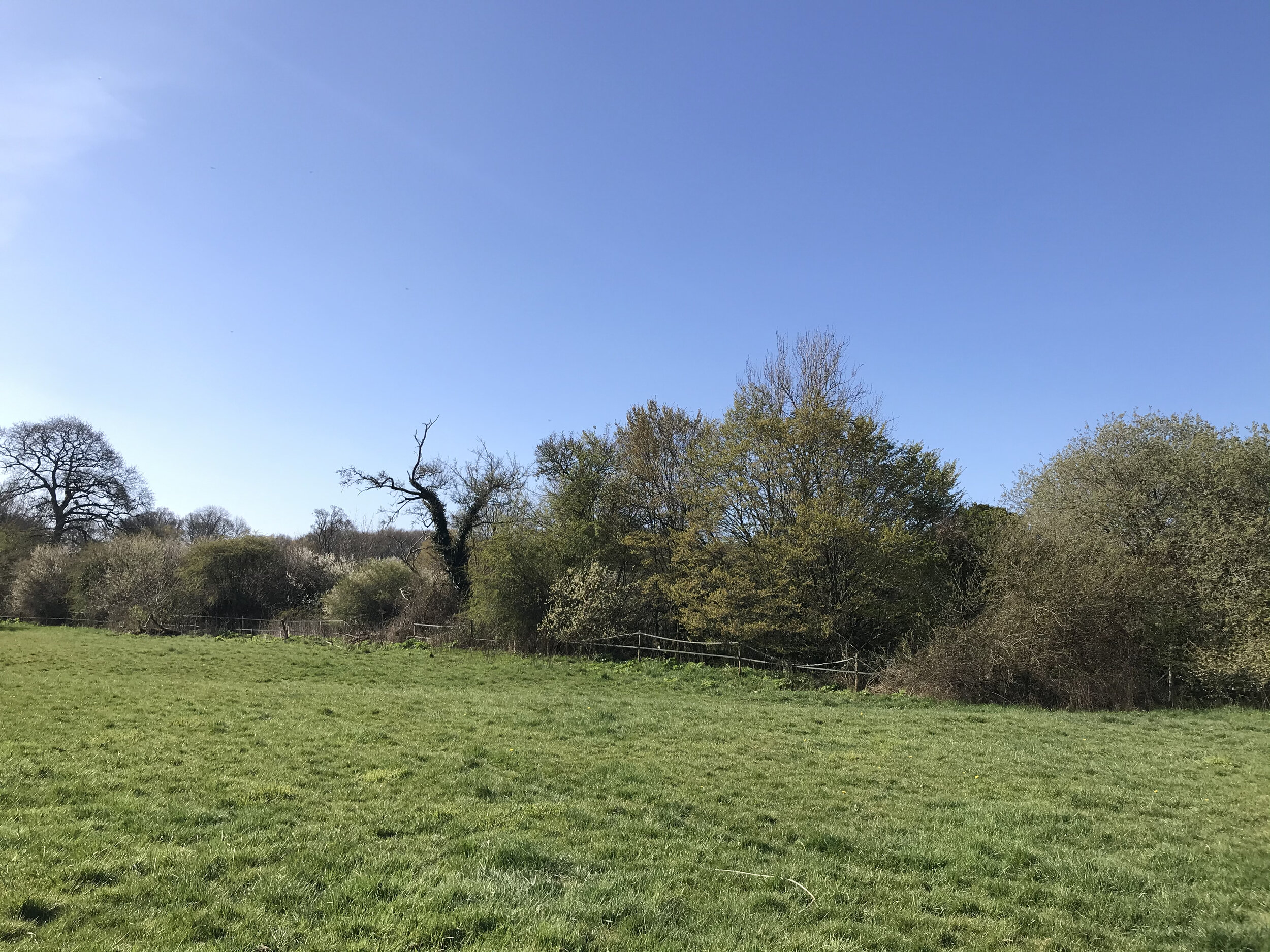
Maple farm is a 30+ acre rewilding project on former grazing land on the Surrey-West Sussex boundary. The project aims to demonstrate the principles of rewilding on a smaller-scale, mimicking natural processes to encourage the return of a healthy, balanced ecosystem that benefits native species. From regenerating native woodland in open areas to enhancing habitats for rare species such as nightingales, Charity Buddy and our partners, Youngwilders are using Maple Farm as a site to explore the various ways nature can return on a smaller plot of land.
We are also working extremely hard to support Britain’s honeybees, whose natural habitat is diminishing every year. Click here to find out more about our efforts to support wild honeybees and our plans to help people learn about natural style bee-keeping.

Ecological Restoration
The vision for Maple Farm is a thriving diversity of habitats in keeping with the natural ecology of the area, providing a haven for plants, insects, birds, and mammals. A mix of scrub, woodland, grassland, and riparian and wetland will be encouraged through natural regeneration, enrichment planting and other interventions, taking an experimental approach to encourage nature’s return.
The project will follow the key principles of rewilding - aiming to restore natural processes to facilitate the return of biodiversity. Where possible, Youngwilders will use a hands-off approach to encourage, observe and record natural processes returning. Smaller rewilding projects like Maple Farm, however, differ from the approach that can be taken at large sites like Knepp and Wild Ken Hill. A greater degree of intervention is required to kickstart and mimic the processes on a smaller site that would occur naturally at a landscape scale. Well-targeted interventions in the initial phase, and light-touch management of the site thereafter, will be necessary to achieve our habitat enhancement aims on Maple Farm.
Youth Engagement
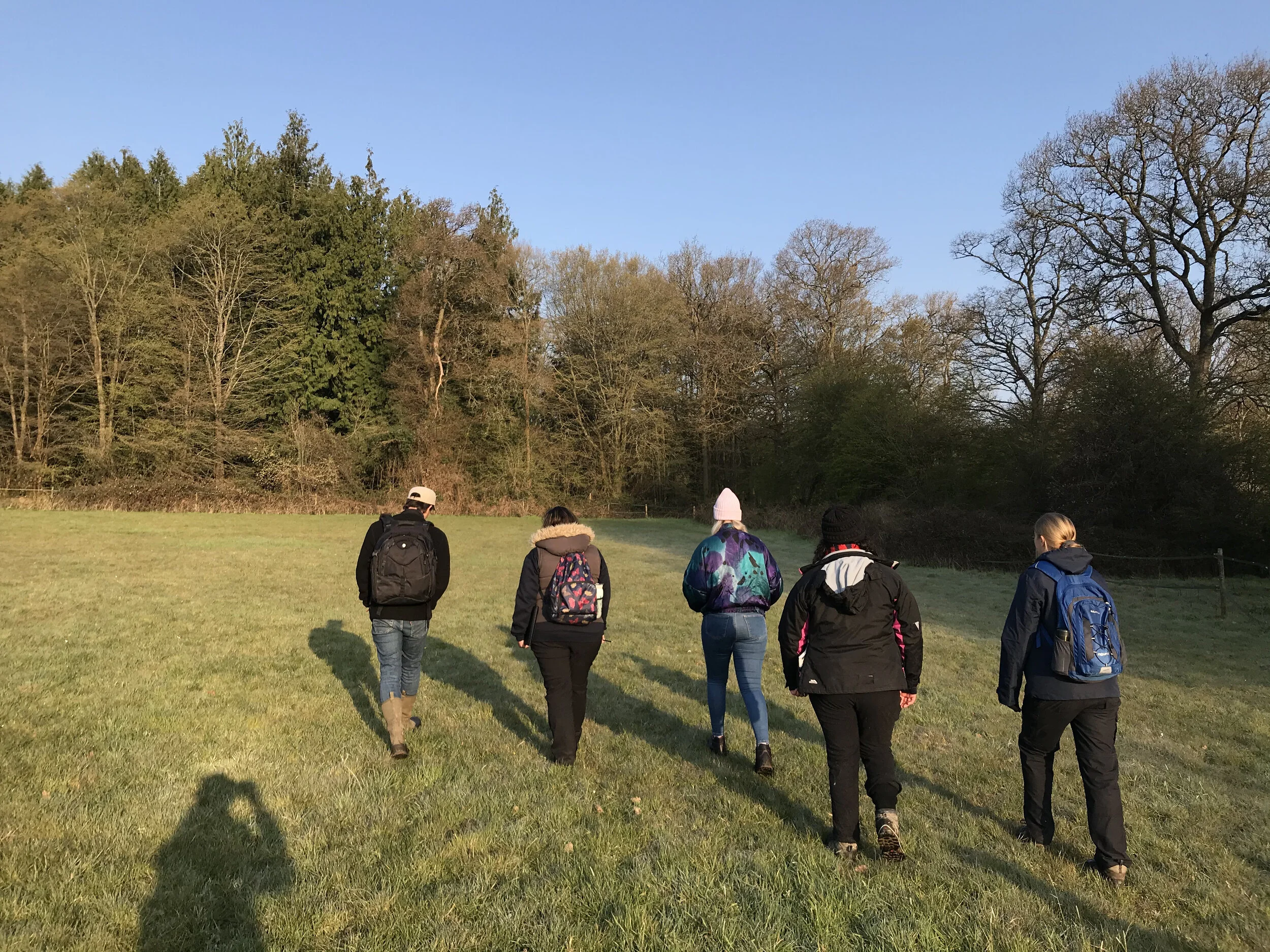
Our work here will be documented for scientific research and communications in order to bring a wider community along with nature’s recovery at the site. Specifically, the project will aim to involve young people where possible - including young ecologists, volunteers and researchers - aiming to inspire a new generation of environmental stewards. Youngwilders will seek to collaborate with existing research institutions and youth engagement groups and, in the long term, the project will collaborate with surrounding landowners to enhance habitat connectivity.
What’s in our plan for 2026?
January - A volunteer day to plant scrub was planned, but due to excessive flooding of the River Lox, it had to be cancelled.
Monitoring the trial pits for the Great Crested Newt ponds continued to assess them for viability.
Professional training for two of our team regarding Giant Hogweed Management occurred, in readiness for the new season.
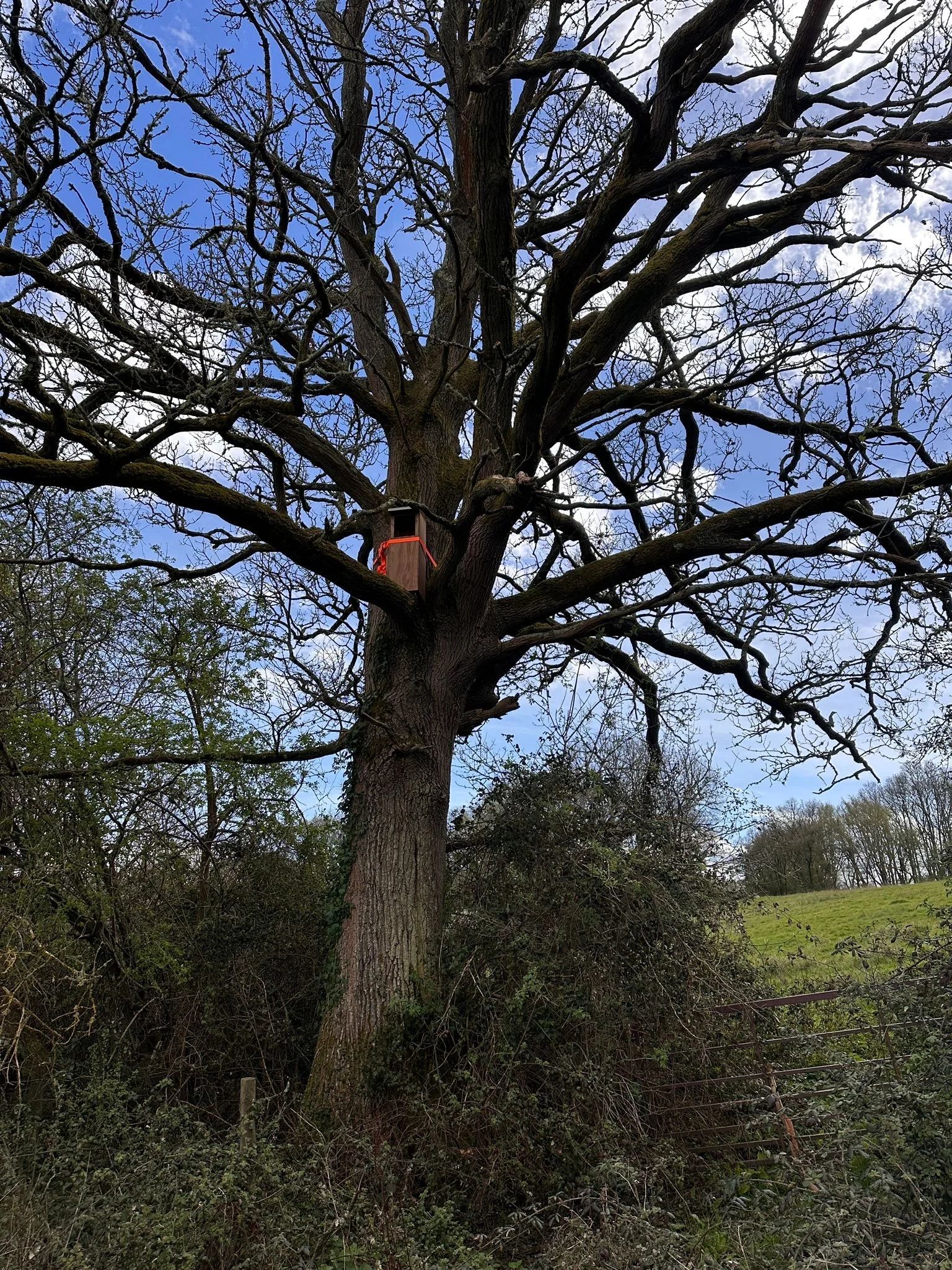
February - The barn owl boxes were installed, and 2 tawny owl nesting boxes were being made by our volunteer.
March - A volunteer day on 14th March occurred to plant scrub and to erect some small-bird nesting boxes throughout the site.
April -
4/5th April - Our first treatment of Giant Hogweed using the stem injection method occurred on following the training of our team by Lantra (PA1 & PA6inj).
5th April - The Tawny Owl nesting boxes have been erected, albeit a little late for this season, but we are now prepared for next year!
6th April - A visit from our Wild Stewards to mulch the newly planted trees.
7th April - a visit from the Newt Conservation Partnership to further assess the trial pits’ performance and to reach a conclusion regarding the viability of the ponds.
11th & 12th April - Beehive making workshop for free living bees, and Natural style beekeeping (using the Warre hive) workshop.
15th April - Nightingale and breeding bird survey delivered by Surrey Wildlife Trust.
25th -26th April - Giant Hogweed treatment using stem injection method.
May -
9th-10th May - Giant Hogweed treatment using stem injection method.
13th May - Nightingale survey by Dan Banks from Surrey Wildlife Trust.
13th May - Visit from Surrey County Council hosted by Charity Buddy and Youngwilders to record progress at Maple Farm, and video some of the activities that their grant is being used for (monitoring equipment, new pond creation and educational signage along Public Rights of Way).
28th May - UK Habitat Baseline survey to be delivered by our Ecologist, Meg (volunteer from Youngwilders) to compare with the 2021 Survey undertaken by Surrey Wildlife Trust.
June -
5th-7th June - Plans underway for an ‘Invertebrate weekend’ including overnight camping, hosted by the Youngwilders, to deliver field skills training classes and ongoing monitoring of the site.
Dates TBC -
2nd breeding bird survey of 2026 (end May/beg June).
Ongoing visits from young Wild Stewards (Ferozah and Tilda) to undertake monitoring tasks focussing on quadrat surveying.
September tbc - Pond creation for general wildlife (Surrey location).
November/December - Potential hedge laying.
Pond creation (x2) in partnership with the Newt Conservation Society (Great Crested Newts, West Sussex location)
Our Achievements March 2022 to December 2025


-
March 22 - Ground-breaking eco hot water treatment was tested to tackle invasive Giant Hogweed as an alternative to the traditional glysophate chemical application.
May 22 – “Visions of Soon” , a climate activism magazine and project conducted interviews and attended a photoshoot onsite at Maple Farm. The article was released in early 2023 to a positive reception.
June 22 - Mulching volunteer day. 15 young people mulched over 1000 trees in the newly planted, central hedgerow.
June 22 - Joe Revans published his AI art piece on the rewilding of Maple Farm, exhibited at the Central Saint Martins Masters Show. Interest in the Maple Farm project received a marked boost.
July 22 - Film crew from the UN Climate and Oceans filmed on location at Maple Farm for part of their documentary on rewilding in Sussex, ‘Revival’.
August 22 – The drought seriously affected the newly planted hedgerows. Youngwilders team members watered the central hedgerow during the Summer 2022 heatwave to aid hedge and tree survival rates
September 22 - An animal temporary fencing infrastructure was installed to contain resident sheep.
A bug hotel, bird boxes and bat boxes were also scattered around the site.
October 22 - ‘Revival’ premiered at the Horsham Green Film Festival to a very positive response. Interest in the Maple Farm project received its most significant boost yet.
November 22 - ‘‘Free the landscape” volunteer day involved 16 young people removing around 1 km of fencing. Fence posts were turned into an animal shelter with a camera trap set up to record new residents.
December 22 – Youngwilders team members came to site to complete the sheep fencing in readiness for late winter grazing, allowing for increased natural regeneration in other parts of the site. Re-mulching and de-weeding was undertaken on the central hedgerow.
January 23 - Details and design for the Wilding Hub, an onsite structure for the Youngwilders and Charity Buddy nature education programs, were confirmed. It’ll be built using materials repurposed from equestrian field shelters.
February 23 - 20 volunteers planted and mulched a new 100-metre, 700-tree hedgerow on the north side of the site.
March 23 – Youngwilders’ new‘Project officer program’ formally began. This is an action-focused, nature education program that aims to engage young people in nature, involving them in restoration/nature recovery projects in their local area.
April-May 2023 - Youngwilders lead a large volunteer effort dismantling two disused horse shelters on the site, and using these and other waste materials to construct a large outdoor classroom on the site. This activity engaged with 40 young people over two weekends.
June 2023 - Giant Hogweed management, work towards containing the presence of harmful invasive species.
July 2023 - Working with the Youngwilders Summer Intern and a team of 5 young volunteers, soil soakage testing was carried out across the site to assess the suitability of floodplain wetland scrapes
October 2023 - Fence removal volunteer day, engaging 15 young volunteers. Waste material used to build an animal shelter on the site.
November 2023 - Camera trapping exercise, fixed point photography of the site.
December 2023 - Relationship established with Jack and Gill forest school, for shared use of the outdoor classroom on the site. First collaboration scheduled for Spring 2024. This will enable pre-school children to spend time every week in nature.
January 2024 - First artist in residence began. Sound artist Dee Sharma will be producing a series of bio-acoustic recordings from the site for public exhibition.
February 2024 - Lead ecologist Meg Cookson designed our new "Wayfinders" programme, a series of youth-lead fields skills lessons and citizen science efforts based at the Maple Farm Classroom to both educate young people and formally survey the site to measure our ecological progress. Wayfinders conveniently coinciding with the new beehive building education era!
March 2024 - Project Officer Conor McNeil conducted a series of minor interventions, removing excess fencing, etc. starting our national Wild Stewards Programme in earnest.
April 2024 - 2 x Eco Bee Hives installed to provide essential habitat to wild honeybees (Phase 1 of project to help wild honeybees)
May 2024 - Wayfinders weekend - Habitats & Birds Field skills training for 20 young people using the outdoor classroom
June 2024 - Wayfinders weekend - Invertebrates Field skills training for 20 young people using the outdoor classroom
July 2024 - Wayfinders weekend - Bats & Woodland Field skills training for 20 young people using the outdoor classroom
July 2024 - Log Hive building workshop to create natural style hives for wild honeybees. (Phase 2 of the project to provide habitat for wild honeybees, and to teach people how to make hives)
August 24 - Collectied reptile survey data and materials, mains water pipe investigation in advance of the proposed newt pond creation, and new bridges installed across the river Lox, with removal of styles and stock fencing to allow greater movement for wildlife through the land.
September 24 - Artist in Residence Dee Sharma prepared a talk at Knepp Rewilding on their insect recording work at Maple Farm. Also test pits were dug to monitor water levels in preparation for the Great Crested Newt ponds.
October 24 - Some winter-proofing of the Eco Classroom was conducted for extended forest school use.
October/November 24 - 2 test pits were dug in collaboration with our team and The Newt Conservation Partnership. Yellow Rattle seeds were sowed to kick start our wild flower meadow.
October/November 24 - Drain removal. Mapped drainage as part of a desktop feasibility study and, if the study suggests removal is straightforward/sensible, working out a cheap mode of disruption of field drains.
December 24 - Further ‘de-fencing’ and bioturbation in Middle field was undertaken.
January 25 - New Wild Steward Dani visited Maple Farm with Conor and they prepared a plan for 2025.
February 25 - A volunteer day was hosted by Youngwilders to sow Yellow Rattle, to develop our wildflower meadows (previously delayed due to flooding of the River Lox)
March 25 - Conor (Wild Steward) visited the site and installed some monitoring camera equipment to record activity this Springtime.
April 25 - Simon Kellam (natural honey bee expert) visited and repaired 2 of the natural beehives and made plans for future workshops.
May 25 - a Wayfinder’s ecological event was hosted for 25 young people.
July 25 - a half day workshop and tour was hosted by Charity Buddy to showcase the natural beehives and educate attendees about honey bees.
Also a Natural style beekeeping workshop was hosted to showcase more bee-centric ways to care for honey bees.
August 25 - A day workshop was hosted for young people to learn about natural, free-living bees.
September 25 - A workshop was hosted to make bee hives for free-living bees out of reclaimed materials.
Youngwilders hosted a woodland ‘ghost walk’ to campaign for the safety and protections of our ancient woodlands.
October 25 - A film was made about our ‘Artists in Residence’ to showcase the importance of integrating creativity with nature. A photography exhibition was held through October and November in London highlighting the rewilding at Maple Farm.
November 25 - One of our senior volunteers, Peter Juniper, made 2 barn owl boxes which he donated.
Youngwilders appeared in an article in The Guardian - inspired by their time spent at Maple Farm, and photographed on site by the journalist.
December 25 - Our new Wild Stewards, Ferozah and Tilda came to the site for their first visit and captured some data from fixed point photogrpahy, and set up some bioacoustic monitors.

Want to know more?
Follow our blog for updates on the project. We’ll share everything we’re learning, as well as potential opportunities to get involved. We’d also love to hear from you so please do message us at info@charitybuddy.org
